2026-11-28 ·
Signs of a Hidden Water Leak in Your Houston Home
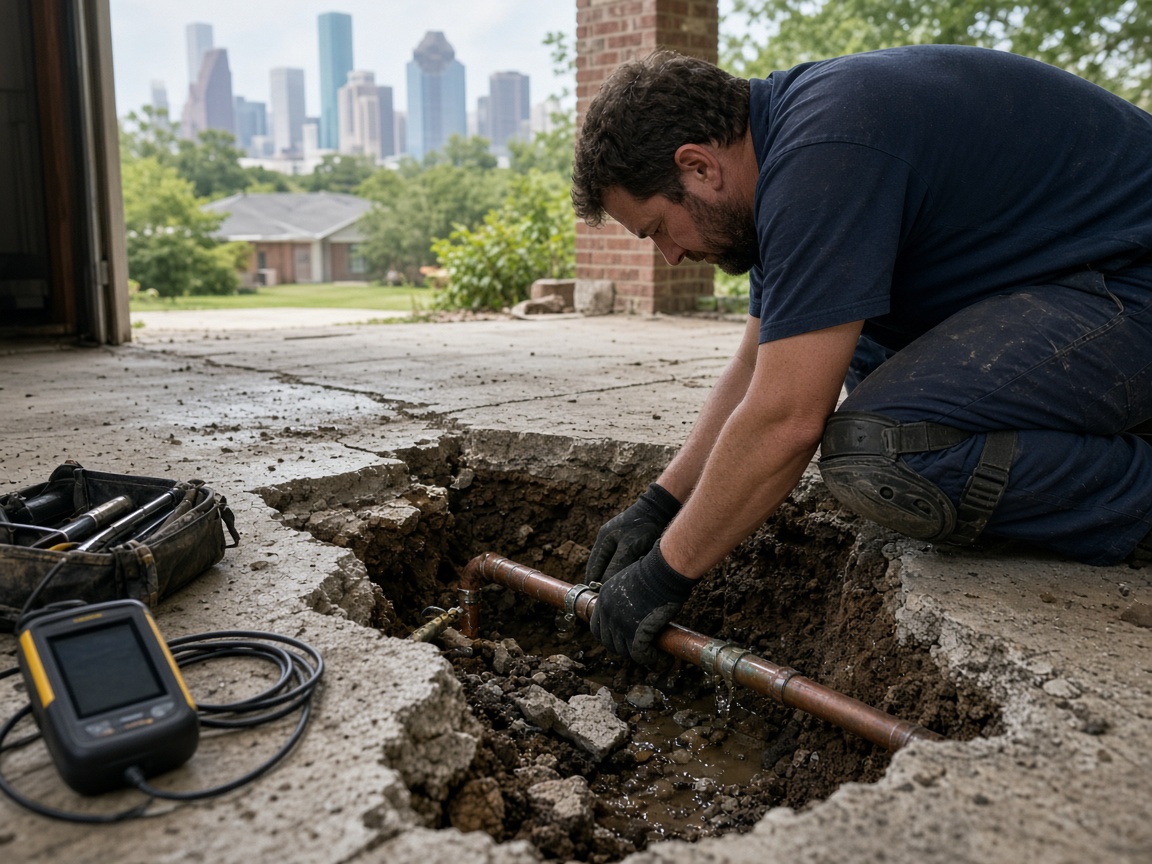
A hidden water leak in a Houston home rarely announces itself with a puddle. Most of the time it starts as a pinhole in a supply line under a concrete slab, a fitting that has worked loose inside a wall, or a joint that has worn thin after years of pressure. The water escapes slowly, spreads through soil and concrete, and shows up somewhere else entirely. That is why the first signs are often small changes in a floor, a wall, or the way a home sounds and smells, rather than standing water.
Signs You Can See and Feel
- A warm or damp patch on the floor: A hot-water line leaking under a slab often warms the tile or wood above it. A patch that stays warm or damp while the rest of the floor is dry is one of the clearest signs of a leak below.
- Flooring that changes shape: Tile that cracks in a straight line, wood that cups or buckles, and carpet that stays damp along one edge can all point to water moving under the floor.
- A musty smell that will not go away: Water trapped under flooring or inside a wall cavity keeps the area damp, and a musty smell in one room or hallway is often the first thing a homeowner notices.
- Baseboards and walls pulling away: Damp drywall swells, paint bubbles, and baseboards pull away from the wall where water has been sitting behind them.
- A patch of lawn or soil that stays wet: Outside, a soggy patch of soil, a sunken area near the foundation, or a spot where grass grows faster than the rest of the yard can mean a supply line is leaking underground.
Signs in Your Water Use and Meter
A hidden leak also shows up in the way a home uses water. A water bill that climbs without explanation, a water heater that runs longer than it used to, or pressure that drops at one fixture while the others stay normal are all worth checking. The simplest test is the meter: turn off every fixture, then watch the meter. If it keeps moving, water is going somewhere it should not go. A meter that moves with everything off is a strong sign of a leak on the supply side, and it is the first check we make on a visit.
Why Houston Homes Hide Leaks So Well
Houston homes are good at hiding leaks. Much of the city sits on expansive clay that swells when wet and shrinks when dry, so a slab can shift and stress a supply line without any visible crack in the concrete. Many homes in Montrose, the Heights, and Midtown have older copper lines that have been under pressure for decades, while newer homes in Katy, Sugar Land, and Pearland often have PEX lines that fail at fittings and connections. Hot, humid summers keep the ground moist for long stretches, so a leak can run quietly for months before it shows up on a floor or a meter. By the time a sign appears, the water may have traveled several feet from where it started.
How Leak Detection Works
Finding the source is a separate step from fixing it, and it is the step that keeps a repair small. Our water leak detection work starts with the meter and a controlled pressure test to confirm whether the leak is on the supply side. Then we use acoustic listening equipment to hear water moving through a line, and thermal imaging where it helps on tile floors. Each check narrows the location, and we explain what we found in writing before any work starts. If you want the full picture of the process, our water leak detection page explains how a visit works, and our slab leak repair page covers what happens once a leak under a slab is found.
What to Do When You Spot a Sign
If you spot one of these signs, start by noting where and when you saw it, and check the meter with everything off. Avoid opening a slab or a wall to look for the leak yourself, because a leak under concrete can sit close to drain and sewer lines that run beneath the same slab. Contact us to arrange an inspection. We check the meter and the plumbing that is visible first, then explain the findings in writing before any work starts. After the job, we walk you through the old and new parts, so you can see what was done and why.