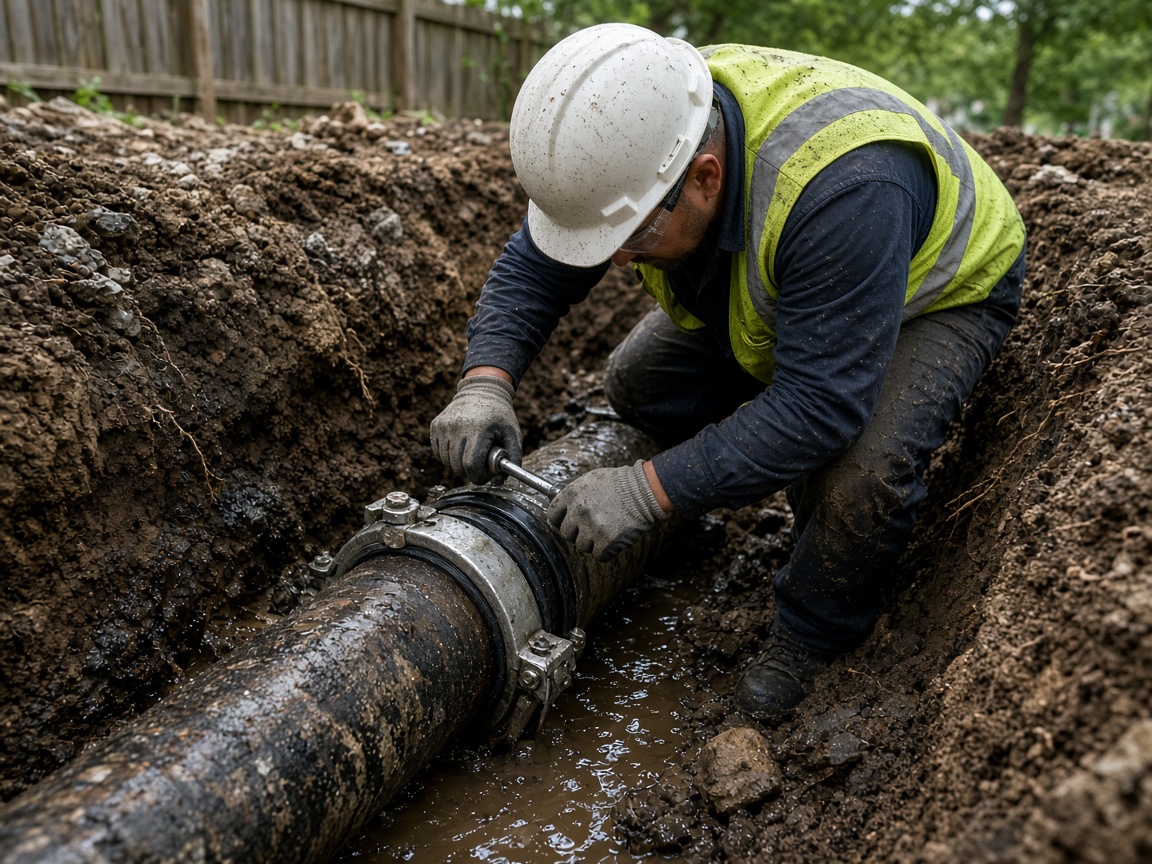
Underground water lines in Houston sit in some of the hardest soil in Texas. Much of the city and Harris County is built on expansive clay that swells when wet and shrinks during the long dry spells that follow hot summers. That movement strains buried copper, galvanized steel and PEX runs, especially where a line crosses under a driveway or runs along a foundation edge. In older neighborhoods like Montrose, the Heights and parts of Midtown, original service lines may be galvanized steel that has corroded from the inside, cutting flow long before a visible drip appears. Our team handles underground pipe repair across the city, from the meter to the house and from outdoor hose bib runs to the main feeding a property, and we start by confirming where the water is actually escaping before any ground is opened.
Harris County's subtropical weather shapes the timing of this work. Hot, humid summers bring heavy afternoon storms, and a single tropical system can saturate the ground for days, pushing water around buried pipe and exposing joints that were already seeping. Mild winters mean the soil rarely freezes, so the frost-related bursts common in northern states are uncommon here, but clay movement remains a year-round problem. Homeowners often assume a soggy patch in the lawn is just poor drainage after rain. In Houston it is frequently a pressurized supply line weeping through a fitting, and that water keeps saturating the soil until the grass sinks or a sidewalk begins to crack. Acting early keeps the excavation smaller and the yard in better shape.
The repair method depends on the material and the route. A failing copper service may be spliced with a compression coupling if the damage is localized and the surrounding pipe is sound. Galvanized runs that have lost most of their wall thickness usually make more sense to replace, typically with PEX or copper routed to avoid the worst of the clay and tree roots. Where lines cross beneath concrete flatwork, we try to route around it rather than cut through, because every extra cut adds work and restoration. Before anything is dug, we confirm the scope in writing after inspection, so you know which section is being repaired, where the trench will run and how the yard or driveway will be restored.
Signs an Underground Water Line Is Leaking in Houston
Watch for a water bill that climbs without any change in household use, a meter that keeps moving when every fixture is off, soft or unusually green turf over one section of the yard, a hissing sound near the water meter box, or a driveway or sidewalk seam that is pulling apart. In River Oaks and the larger lots around the Heights, a leak can run for months before anyone sees surface evidence because the water spreads through the clay rather than pooling. If you notice several of these at once, contact us to schedule an inspection.
Where Underground Pipe Work Gets Complicated Across Houston
Older Downtown and Midtown buildings often have service lines that were never mapped, so the route is a guess until we locate it. Homes in Katy, Sugar Land and Pearland tend to have newer subdivision layouts, but they still face the same clay movement and storm saturation as the city core. Shared access easements, mature oak roots near the street and mixed utility lines are common reasons a simple repair turns into a longer job, and we explain those conditions before work begins.
Technician insight
In Houston, the thing that catches most people out with underground pipe is assuming a wet spot after a storm is just drainage. Our clay soils hold water and keep a leaking supply line saturated for weeks, and the grass often looks fine until the ground starts to sink. We always check the meter and the shutoff valves first, because a meter that keeps turning with everything off tells us more than the lawn does.
Soggy Yard in a Heights Bungalow
A homeowner in the Heights noticed a soft, spongy section of lawn and a rising water bill but no obvious surface leak. We pressure tested the service line, confirmed the loss was in the buried section between the meter and the house, and located the failing joint before excavating. Because the galvanized line had corroded along a short run, we replaced only that segment and routed it around a concrete walkway, then restored the lawn to match the surrounding turf.
Underground Pipe Repair Services We Offer
✓Water Service Line Repair
Repairs the pipe running from the city water meter to your home, which is often the source of hidden loss in Houston yards. Locating the break early limits the amount of lawn that has to be opened.
✓Galvanized Service Line Replacement
Replaces corroded galvanized steel supply lines that restrict flow and can discolor water. Swapping them for PEX or copper restores pressure and removes a long-term weak point.
✓Underground Leak Locating
Pinpoints where water is escaping before any digging starts, using pressure testing and listening equipment. Accurate location keeps the trench short and the repair targeted.
✓Meter Box Shutoff Valve Replacement
Replaces failed curb stop and shutoff valves at the meter box, which can seize after years in wet clay. A working valve lets you isolate the house during repairs and emergencies.
✓Outdoor Hose Bib Supply Line Repair
Fixes the buried supply run feeding exterior spigots and irrigation connections, a common source of leaks that show up only in the yard. Repairs are sized to keep the lawn intact where possible.
✓Main Water Line Repair Under Driveways
Addresses the main line that runs under driveways and walkways from the street to the home. Routing and restoration are planned around the concrete to minimize breakup.
How it works
- 1
Inspect and Locate the Leak
We review the symptoms, check the meter and shutoff valves, and run pressure tests to confirm which section of underground line is losing water. Locating comes first so the repair area stays as small as possible.
- 2
Confirm the Scope in Writing
After inspection, we put the repair plan in writing, including the pipe material, the route, the trench location and how the yard, driveway or walkway will be restored. You review it before any ground is opened.
- 3
Excavate or Route Around Obstacles
We dig only where the leak or replacement run requires it, and we work around concrete, mature roots and existing utilities when possible. Clay is dug and staged so it can be backfilled and compacted properly.
- 4
Pressure Test and Restore
Before backfilling, the repaired or replaced line is pressure tested to confirm it holds. We then backfill, compact the soil and restore the surface as closely as possible to how it looked before work began.
Pricing
Underground work is scoped after inspection because the route, depth, pipe material and surface restoration all change the job. Contact us to describe what you are seeing, and we will explain what the inspection involves and what will be confirmed in writing before any digging.