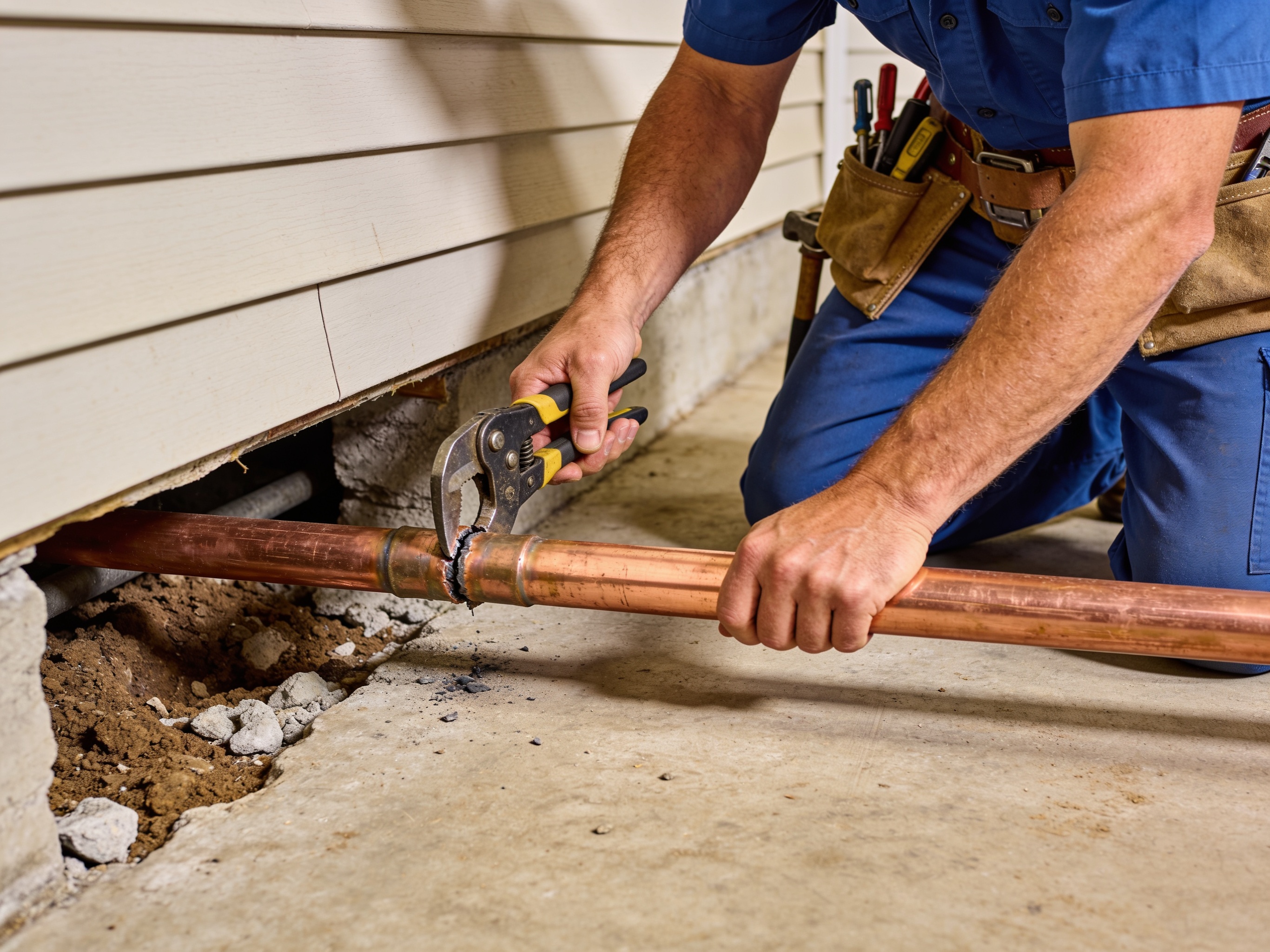
A slab leak is a pressurized supply line leaking underneath a concrete slab foundation, and it is one of the most common hidden plumbing failures we see across Houston. Most homes from the Heights bungalows to the newer subdivisions in Katy and Pearland sit on slab-on-grade foundations, with copper or PEX supply lines run through the concrete or along the soil beneath it. Houston's expansive clay soils swell during the heavy rains that come with our summer storms and shrink during dry spells, and that constant movement puts stress on fittings and pipe walls. Hot, humid summers also keep crawl areas damp and soil saturated, which means water from a leak can spread far from where it starts. By the time a homeowner notices a problem, the water has often traveled several feet.
Finding the leak is the part that separates a careful repair from a blind guess. We start with the water meter and a controlled test to confirm whether the leak is on the supply side, then use acoustic listening equipment and pressure testing to narrow the location. Thermal imaging helps on tile floors where warm spots show where hot water lines are leaking. Warning signs include a warm or damp patch on the floor, a dip or crack in tile or carpet, a hissing sound from under the floor, or a water meter that keeps moving with every fixture turned off. Once we know where the leak is, we walk you through the realistic repair options, which may include a targeted spot repair through a small access point or rerouting the line above the slab. Each has tradeoffs in disruption, durability, and access.
Repairs that break into a slab or reroute supply lines often need a plumbing permit and inspection through the City of Houston, depending on the scope and your property's location, and we confirm what applies before any cutting starts. Slab work carries real risks that should shape how any job is done. Concrete slabs in Houston commonly contain steel reinforcement, and a careless saw or jackhammer can damage lines that run nearby, including drain and sewer lines that sit beneath the same slab. We locate lines before we cut, avoid blind demolition, and keep the opening as small as the repair allows. We also tell you when a whole-house repipe makes more sense than chasing one more pinhole leak in aging copper, because repeated repairs in the same run tend to fail again.
Houston's housing stock makes this work vary from street to street. Older homes near Montrose, Midtown, and the Heights may have aging copper or galvanized lines with corrosion that has been building for decades, while newer homes in Sugar Land and Katy usually have PEX lines that resist corrosion but still fail at fittings and connections. Larger homes in River Oaks often have long supply runs that feed multiple bathrooms, so a single leak can affect pressure and fixture performance across the house. Downtown condos and townhomes present their own access challenges. Because every foundation and pipe layout is different, we confirm scope in writing after inspection so you know exactly what will be opened, what will be repaired, and what the finished work will look like.
Technician insight
In Houston, the thing that catches most people out with a slab leak is assuming the leak is directly under the spot where the water shows up. Our clay soil lets water travel along the slab and under the foundation, so the wet spot on the floor can be several feet from the actual break. We always verify the leak location with testing before anyone breaks concrete, because opening the wrong section wastes time and creates more damage.
Hot Water Leak Under a Heights Bungalow
The homeowner noticed a warm, soft patch in the hallway tile and a water meter that kept moving with every fixture off. Pressure testing confirmed a hot water line leak, and thermal imaging showed the heat pattern extended toward the kitchen. We opened a small section, located the failing fitting, and replaced the damaged run while protecting nearby drain lines. The homeowner had a clear written scope and the hallway was restored after the repair was pressure tested.
Slab Leak Repair Services We Offer
✓Main Water Shutoff Valve Replacement
A failing main shutoff can leave you unable to stop a slab leak quickly. We test and replace worn valves so you can isolate water fast during a repair or emergency.
✓Copper Supply Line Repair Under Slab
Pinhole leaks and corrosion in aging copper lines are common in older Houston homes. We locate the damaged section and replace only the run that needs it.
✓PEX Supply Line Repair Under Slab
PEX fittings and crimp connections can separate over time from soil movement. We find the failing connection and repair it with properly rated materials.
✓Hot Water Line Leak Repair
Hot water leaks often cause the most floor damage because they soften flooring and promote mold in humid conditions. We prioritize locating and sealing these lines quickly.
✓Slab Leak Pressure Testing
Controlled pressure testing confirms whether a supply line is holding and helps isolate the leak before any concrete is opened. It gives you a clear answer before you commit to a repair.
✓Fixture Connection Leak Repair
Leaks at the stub-outs under tubs, toilets, and sinks can mimic a slab leak. We check each connection and separate fixture leaks from foundation-level problems.
✓Slab Leak Rerouting Above Foundation
When a leak is in a difficult location, rerouting the supply line through the attic or wall cavity can eliminate the need to repeatedly open the slab. We explain the tradeoffs before recommending it.
How it works
- 1
Initial Inspection and Shutoff Check
We check your water meter, test the main shutoff, and talk through the symptoms you have noticed. This confirms whether a slab leak is likely before we move to detailed testing.
- 2
Leak Location and Pressure Testing
Using acoustic listening, pressure testing, and thermal imaging where useful, we narrow the location of the leak. We mark the suspected area and explain what we found.
- 3
Repair Options Review
We walk you through the realistic options, such as a targeted spot repair or rerouting above the slab, including disruption, access, and durability. You decide the approach before any work begins.
- 4
Written Scope Confirmation
After inspection, we confirm the scope in writing, including what will be opened, which lines will be repaired, and any permit or inspection requirements that apply at your address.
- 5
Repair and Final Testing
We make the repair with care to protect nearby lines, then pressure test the repaired section before backfilling or restoring flooring. We review the finished work with you.
Pricing
The final scope depends on where the leak is, how deep it sits, and which repair approach you choose. We confirm scope in writing after inspection so the work is defined before it starts.