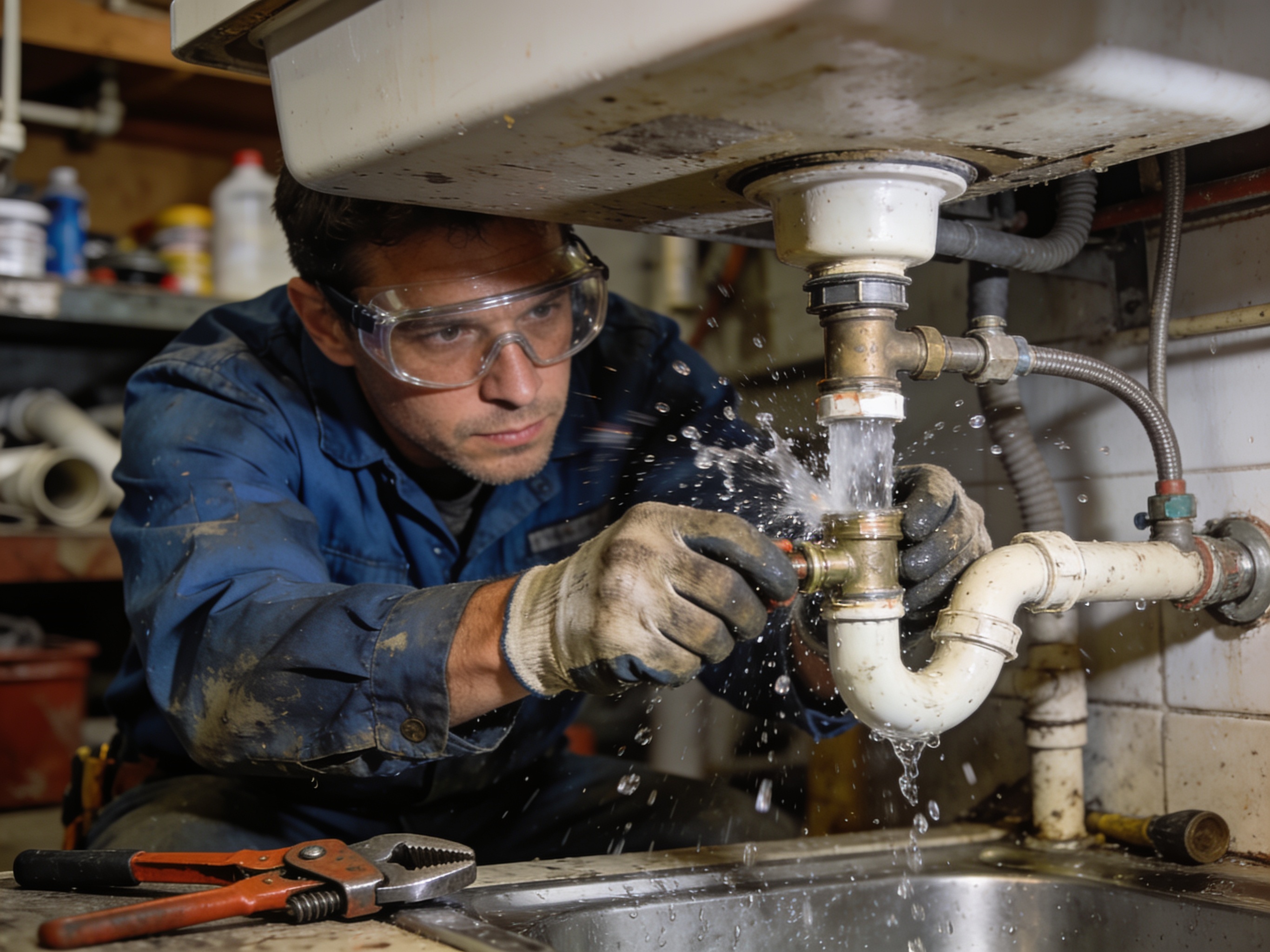
Missouri City sits southwest of Houston in Fort Bend County, and much of its housing stock went up in the subdivisions built from the 1970s through the 2000s on concrete slab foundations. Along Highway 6 and Highway 90A, many of those slabs sit on dark, expansive clay that swells after rain and shrinks through long dry spells. That movement is the main reason pressurized supply lines run under slabs here crack or joint-fail over time. Our team handles slab leak detection and repair in Missouri City with that soil behavior in mind.
When you contact us about a suspected slab leak, we start with an inspection of the visible signs: a water bill that climbed without explanation, warm spots on tile, hallway floors that feel damp, or a hot-water heater running longer than it should. We test the lines and explain what we find in writing before any work starts. Once the work is done, we walk you through the old and new parts, so you can see what was done and why. We confirm the scope of any job in writing after inspection. Many of our jobs also come from homes in nearby Sugar Land, Katy, and Pearland, which share the same clay soils and slab construction, with findings explained first and work you can inspect.
Around Missouri City
We regularly work near:
- 📍Brazos Town Center
- 📍Sienna Plantation
- 📍Lake Olympia Parkway
- 📍Highway 6
- 📍Cravens Road
Slab Leak Repair Houston in Missouri City — Local Notes
- •Slabs poured in Missouri City neighborhoods from the 1970s through the 1990s often have original galvanized or early copper supply lines, and those older runs fail differently than newer PEX, so we check the pipe material before recommending a repair method.
- •Expansive clay around Sienna Plantation and older subdivisions off Cravens Road causes slab movement after heavy rain, which can stress joints where lines exit the slab and makes a slow leak harder to spot until flooring shows moisture.
- •Many Missouri City homes have in-ground irrigation systems, and a slab leak near a sprinkler zone can look like overwatering, so we isolate the supply and pressure-test before we assume the lawn is the cause.